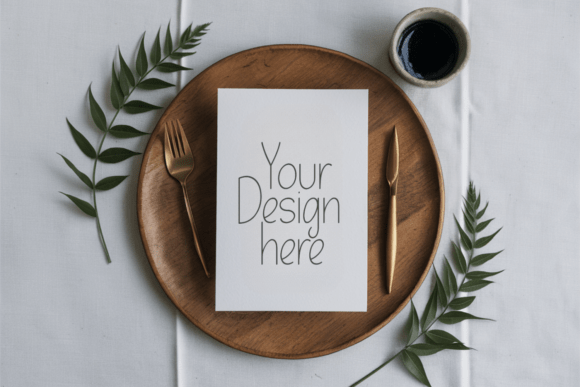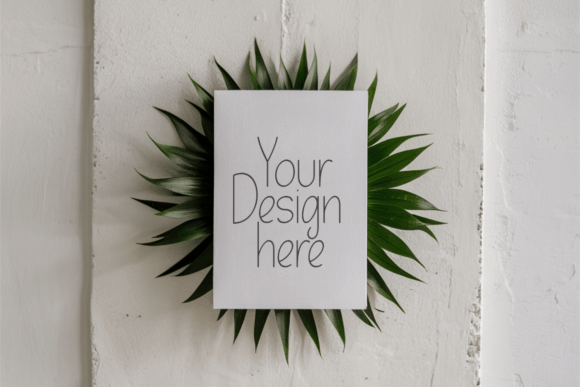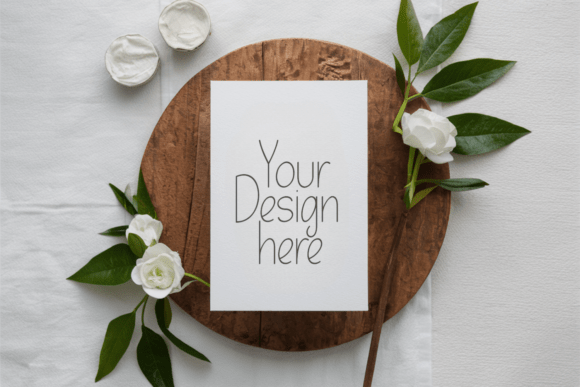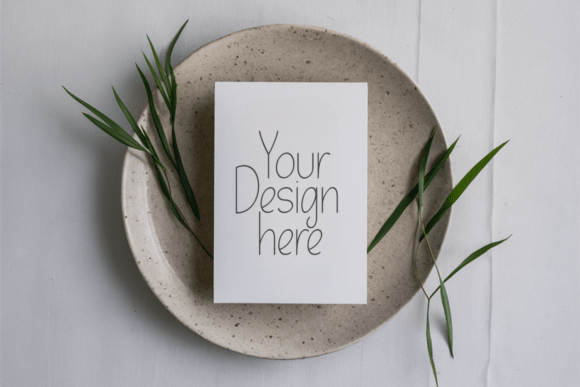
Reviewing 5x7 Greetings Cards Mockup 5 for Embroidery
As a designer who has spent countless hours staring at digitized files and watching needles dance across fabric, I have learned that not every graphic translates well into thread. When I first encountered 5x7 Greetings Cards Mockup 5, my initial reaction was one of cautious curiosity. In the world of Freebies and digital Graphics, it is easy to find flashy visuals that look stunning on a screen but fail miserably under the presser foot of an embroidery machine. However, this particular asset caught my eye because of its clean lines and balanced composition, suggesting it could serve as more than just a static image.
I decided to put this mockup through a rigorous mental and practical evaluation, imagining how it would perform in real-world scenarios. My goal was not just to admire the aesthetics, but to determine if it holds up as a viable foundation for a professional embroidery project. Whether you are an Etsy seller looking to expand your catalog or a hobbyist creating a personalized gift, understanding the transition from digital file to stitched reality is crucial.
First Impressions and Visual Personality
The mood created by 5x7 Greetings Cards Mockup 5 is inviting and polished. It does not scream for attention with chaotic elements; instead, it offers a structured layout that feels intentional. For an embroidery designer, this is a green flag. Complex, cluttered designs often require excessive stitch density to maintain clarity, which can lead to puckering and fabric distortion. This mockup, by contrast, appears to rely on strong shapes and clear negative space.
When I visualize this design translated into thread, I see potential for crisp satin stitch borders and smooth fill stitch areas. The visual personality suggests versatility. It is not overly masculine or feminine, nor is it strictly seasonal, which makes it a strong candidate for year-round use in a craft business. The level of detail seems appropriate for a 5x7 hoop, avoiding the tiny, fragile elements that often break during washing or wear.
Real-World Application Scenarios
To truly evaluate a design, you must imagine it on a physical product. I pictured using this design for a custom tote bag design. Tote bags are popular small shop products, and they provide a sturdy canvas for embroidery. The structure of 5x7 Greetings Cards Mockup 5 would sit nicely on the front panel, offering a professional look that elevates a simple cotton bag into a boutique item.
Another scenario that came to mind was sweatshirt embroidery. A crewneck sweatshirt provides a thick, stable surface that handles stitch density well. If I were creating a holiday embroidery gift or a birthday present, this design could be adapted with specific thread colors to match the recipient’s taste. It could also work beautifully on a pillow cover for nursery decor, provided the scale is adjusted correctly. The key here is adaptability. A good machine embroidery design should feel at home on various textiles without losing its integrity.
For those selling digital embroidery file packs, this type of graphic serves as an excellent base for creating themed collections. You could pair it with different fonts or decorative accents to create unique design assets for your customers. It acts as a reliable framework upon which creativity can be layered.
Technical Considerations and Fabric Challenges
While the design looks promising, there are areas where caution is necessary. Any designer knows that what works on a test swab may behave differently on a curved surface like a cap. If you plan to use this for custom apparel such as hats, you must consider the curvature. The design should be centered carefully to avoid distortion. Additionally, when working with stretchy fabrics, a high-quality stabilizer is non-negotiable. Without proper support, even the best-digitized file can pull and pucker.
Textured fabrics present another challenge. If you are stitching on a waffle-knit towel or a fuzzy fleece, fine details may get lost. I recommend reviewing the design’s smallest elements. If there are intricate corners or thin lines, they might need to be simplified or reinforced with a running stitch outline to ensure they remain visible after washing. Dark fabrics also require careful planning. You must ensure sufficient contrast between your thread colors and the material. A light-colored design on black fabric needs precise underlay stitching to prevent the background from showing through.
It is also vital to check the hoop size compatibility. While labeled as a 5x7 design, always verify the actual dimensions in your software. Some machines have specific limitations, and forcing a design into a smaller hoop can result in truncated edges or misalignment.
Impact on Brand and Customer Perception
Why does the choice of design matter so much? Because it directly affects customer trust and brand consistency. A sloppy or poorly executed embroidery job can damage a reputation built over years. Conversely, a clean, well-stitched finished product signals professionalism. Using a well-structured mockup like 5x7 Greetings Cards Mockup 5 helps ensure that the final output meets high standards.
For commercial embroidery projects, consistency is key. If you are producing batches of embroidered patch items or uniform apparel, the design must reproduce identically every time. This mockup’s balanced layout supports that consistency. It allows for predictable thread usage and stitch counts, which helps in pricing your handmade product accurately. Customers engage more with products that look thoughtful and durable. A design that respects the limitations of the medium shows that the creator cares about quality.
Practical Designer Notes
Before you commit to stitching this design on a client’s garment, follow these practical steps:
- Test on scrap fabric: Always run a test stitch-out on the same type of fabric you intend to use for the final product. This reveals any tension issues or density problems.
- Check thread contrast: View your color palette in black and white. If the design disappears in grayscale, it lacks sufficient contrast for clear visibility.
- Inspect small details: Zoom in on the digital file. Are there any nodes or stitches that seem unnecessary? Clean up the file if needed to reduce thread breaks.
- Verify licensing: Since this is listed under Freebies, double-check the license terms. Can you sell the finished product? Can you redistribute the file? Never assume commercial rights are included unless explicitly stated.
- Compare backgrounds: Test the design on both light and dark fabrics to see how the underlay performs. Adjust your stabilizer type accordingly—cut-away for stretchy knits, tear-away for stable wovens.
In conclusion, 5x7 Greetings Cards Mockup 5 offers a solid foundation for various embroidery applications. It is not just a pretty picture; it is a functional tool for designers who value clarity and professionalism. By respecting the technical requirements of machine embroidery and understanding the end-use context, you can transform this digital asset into a tangible, high-value item. Whether for a baby embroidery project or a sophisticated boutique branding effort, this design proves that simplicity, when executed well, often yields the most impressive results.